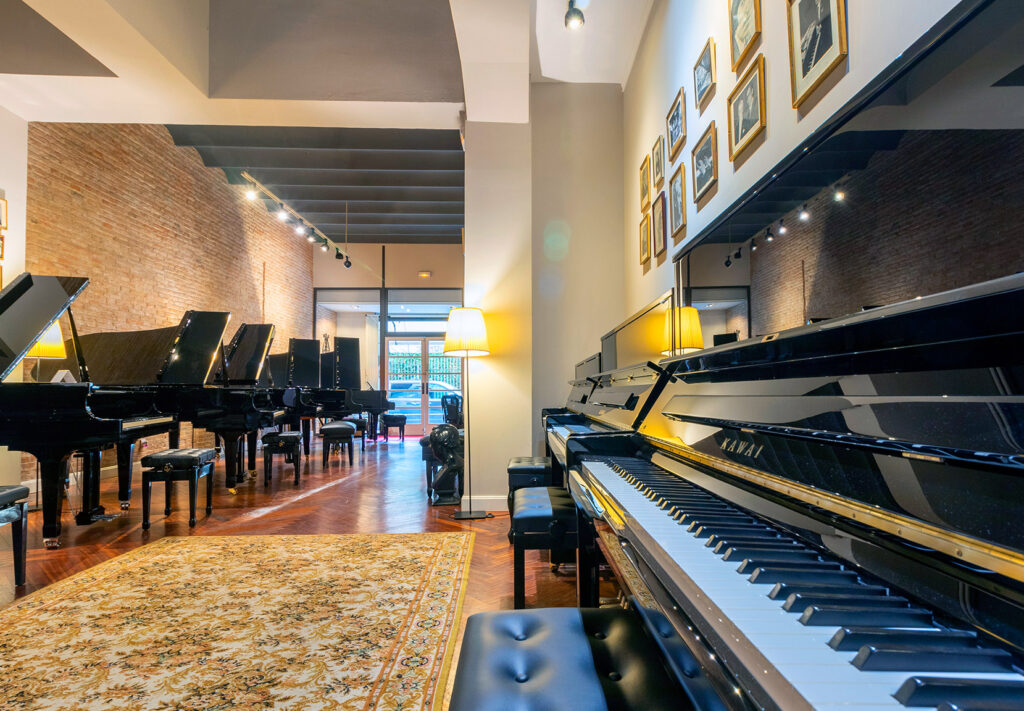
Finding the best piano for beginners in 2026 doesn’t have to be complicated, but it is an important decision. The instrument a person starts with will shape their progress, their motivation, and even the love they develop for music.
At Jorquera Pianos, we have spent 172 years helping students, families, and professional musicians find the right instrument. That’s why this guide combines technical criteria, real workshop experience, and honest recommendations—without myths or exaggerations.
What a Beginner Really Needs in 2026 to Learn Piano
Many people think that “any piano will do to get started.”
The reality is that a poor instrument can slow learning from day one.
Essential Features in a First Piano
A beginner needs a piano with:
- Weighted keys that replicate the feel of an acoustic piano
- Natural dynamic response to learn how to play softly and loudly
- Balanced sound, without harshness or artificial compression
- Stability, both mechanical (acoustic pianos) and electronic (digital pianos)
- Comfort, because practicing should be a pleasure, not a struggle
These features allow students to develop proper technique and enjoy the learning process.
What to Avoid When Choosing a Beginner Piano
- Lightweight or semi-weighted keyboards
- Old pianos without professional maintenance
- Overly basic digital models
- Deals that seem “too good to be true”
All of these mistakes are very common and often lead to frustration.
Acoustic Piano or Digital Piano: Which Is Better to Start With?
There is no universal answer. It depends on budget, available space, and medium-term expectations.
Advantages of an Acoustic Piano for Students
Acoustic pianos remain the benchmark because of:
- Their real touch, impossible to replicate 100% digitally
- Their rich, natural sound, which trains the ear from the very beginning
- Their durability: well maintained, they last a lifetime
- Their ability to grow with the student without becoming limiting
If the goal is serious study, an acoustic piano is ideal.
Advantages of a Digital Piano and When It’s the Best Choice
Modern digital pianos have improved enormously and are perfect when:
- Most models include a silent system (many acoustic pianos have it too, though not all)
- The budget is limited
- Portability is required
In 2026, brands such as Kawai and Roland offer digital models with a surprisingly solid touch for beginners.
The Best Pianos for Beginners in 2026 (Comparison by Price Range)
Beginner Pianos Under €1,000
Ideal if the budget is tight.
Recommended models:
- Kawai CX102 and CX202
- Kawai ES120
- Kawai ES520
These are compact, reliable digital pianos with a good touch for getting started.
€1,000–€3,000: The Ideal Range for Progress
This range offers the best value for money:
- Kawai CN301 (digital)
- Kawai CA-401
- Fully checked second-hand or reconditioned acoustic pianos
Here you’ll already find instruments capable of supporting several years of serious study.
Over €7,000: For Committed Students
A long-term investment:
- Kawai K500
- Kawai K300
- Acoustic pianos restored by professionals
At Jorquera, many fast-progressing students move into this range to fully develop their potential.
Our Recommendations as Expert Technicians: Pianos We Tune and Adjust Every Day
At Jorquera Pianos, we don’t just sell pianos—we work with them daily. We tune, regulate, and voice new, used, and concert instruments.
This allows us to recommend with real-world criteria:
- If your budget is limited: a good mid-range digital piano or a second-hand piano restored by a professional
- If your child studies at a conservatory: an entry-level acoustic piano properly adjusted by technicians
- If you want an instrument that lasts decades: mid-to-high-quality acoustic models or restored pianos
It doesn’t matter if the piano costs €4,000 or €40,000.
What matters is that it’s properly prepared.
Why a Well-Adjusted Piano Makes All the Difference (Even an Affordable One)
New Pianos Arrive “Green”: What That Means and How It Affects Students
Even brand-new pianos arrive from the factory with:
- Unfinished hammers
- Action mechanisms needing adjustment
- Uneven sound
- Keys that feel different from one another
This happens with all brands.
If not corrected, students develop bad habits and lose motivation.
Tuning, Regulation, and Voicing: The Technical Service That Makes the Difference
Our technical service transforms a “green” piano into a balanced instrument:
- Precise tuning
- Complete regulation of keyboard and action
- Voicing to adjust the tone color
Students feel the difference immediately: playing becomes more pleasant, more expressive, and easier.
The Best Pianos for Children Starting Out: Our Advice for Families
Which Models Work Best for Ages 6 to 12
Children need an instrument that:
- Responds smoothly
- Is stable
- Motivates them to practice
Mid-range digital pianos work very well.
If the child will pursue formal studies, a well-adjusted basic acoustic piano is ideal.
How to Choose a Piano That Will Last for Many Years
Our advice:
avoid buying a “children’s piano” and choose one that allows room to grow.
A good piano can accompany the entire learning journey without becoming limiting.
Best Brands for Beginners: Essex, Kawai, and Other Accessible Options
Real Differences Between Popular Brands
- Yamaha: bright, stable sound
- Kawai: touch closer to an acoustic piano and warmer tone
- Roland: digital pianos with excellent technology and expressive capabilities
All are good options depending on the student’s style.
When It’s Worth Investing in a Higher-End Model
When the student:
- Progresses quickly
- Already has a teacher
- Shows exceptional musical sensitivity
A better piano responds better, inspires more, and makes practice more enjoyable.
Practical Tips Before Buying Your First Piano
What to Consider When Visiting a Store or Showroom
- Try several models without pressure
- If you don’t play, listen carefully when someone plays for you
- Pay attention to keyboard comfort
- Ask about the instrument’s real technical condition
Personal feel is key.
How to Ask for a Technical Adjustment Before Buying—and Why It Matters
A proper adjustment turns a decent piano into a great learning instrument.
It ensures the student:
- Plays comfortably
- Gets an even response
- Enjoys the instrument from day one
At Jorquera, we consider this essential, regardless of the piano’s price.
Find the Perfect Piano to Start on the Right Foot
Choosing a first piano is an important decision, and at Jorquera Pianos we want to guide you so you get it right from the beginning. Our technical team adjusts every acoustic instrument so that any student, even at beginner level, can enjoy a comfortable touch, balanced sound, and an inspiring experience.
Come and try different models in our showroom and discover which one best suits your level, style, and budget.
We’ll advise you with honesty, experience, and the commitment of five generations dedicated to the piano.
Your first piano sets the path. We help you choose the right one.
Frequently Asked Questions About Choosing the Best Piano for Beginners in 2026
How can I tell if a piano is suitable for a beginner?
A good beginner piano should have weighted keys, good dynamic response, and a balanced sound. If it’s acoustic, it must be well adjusted; if it’s digital, it should offer a quality keyboard (88 keys, weighted action, and sensitivity). The best way to know is to try several models and, if possible, ask a professional technician—small issues may not be obvious to a beginner.
Is it better to start with a digital or acoustic piano in 2026?
It depends on the environment and level of commitment.
A digital piano is ideal if you’ll always play with headphones, have limited space, or a tight budget.
An acoustic piano is preferable if you want to develop solid technique and a more natural sound.
At Jorquera, we often recommend a mid-range digital piano to start if there are doubts, and moving to an acoustic once the student shows motivation and consistency.
When should a student upgrade to a better piano?
There are three clear signs:
- The student progresses quickly and feels the piano “doesn’t respond”
- The teacher recommends a higher-quality instrument
- The student starts playing pieces that require greater dynamic control and expressiveness
In these cases, a higher-end piano—especially an acoustic one—boosts progress and makes studying more inspiring.
Why is the technical adjustment of a new piano so important?
Because most new pianos leave the factory “green”: they need regulation, voicing, and—on acoustics—a proper initial tuning.
An unadjusted instrument can sound uneven, have inconsistent key response, or cause discomfort when playing.
A proper setup, like the one we perform at Jorquera, dramatically improves the student’s experience, regardless of the piano’s price.
Which brands are most reliable for beginners, and how should I choose between them?
Essex, Kawai, and Petrof are among the most recommended for their stability, durability, and musical quality.
- If you’re looking for an acoustic-like touch, Kawai is often the favorite
- If you prefer a clear, bright sound, Essex is excellent
- If mechanism quality is your priority, Petrof stands out
The best choice depends on the type of student, which is why we always recommend trying several models and being guided by a technician who truly understands the real differences between brands.